
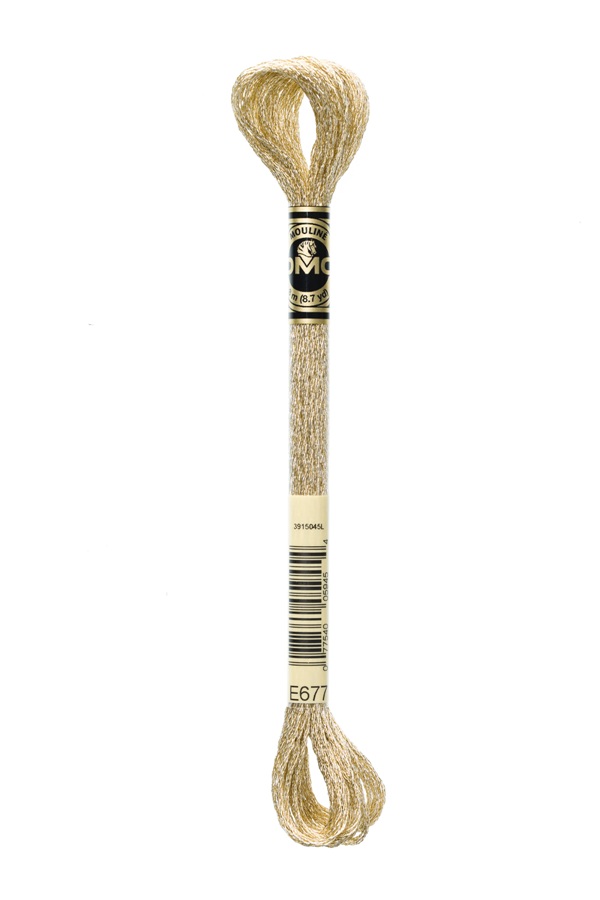
DMC Light Effects thread adds a beautiful shimmer to any stitching project, but it does require some skill and patience. I hope these suggestions help make working with DMC Light Effects trouble free for you.
Handling tips for DMC Light Effects thread:
-
This metallic thread frays easily and tends to kink if not handled correctly. Winding it onto bobbins or other thread keepers will encourage kinks which can be difficult to remove. Keep it in the skein.
-
Work in Short Lengths as these are less likely to tangle or fray.
-
Turn your work over often to check the back for kinks and knots.
-
Use thread conditioner or beeswax on the thread ends. This will prevent fraying.
-
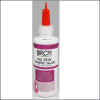
Apply a small amount of Fray Check to the thread end which will be passed through the needle to prevent fraying. Also apply it to the end that will stay on the skein so that it’s ready to use when you next cut a length.
-
When two strands of thread are used in a pattern try folding a single strand of light effects in half, and threading the folded end through the needle. Lift the looped end of the thread over the point of the needle. This will secure the thread and prevent it slipping out of the needle while you stitch. This will also help reduce fraying because there will be no loose ends being pulled through the fabric.
These practices will take some of the fray and the kink out of stitching with this beautiful thread, and allow you to enjoy adding sparkle to your projects.
- Details
-
 By Maureen Maguire
 - Category: How to use our products
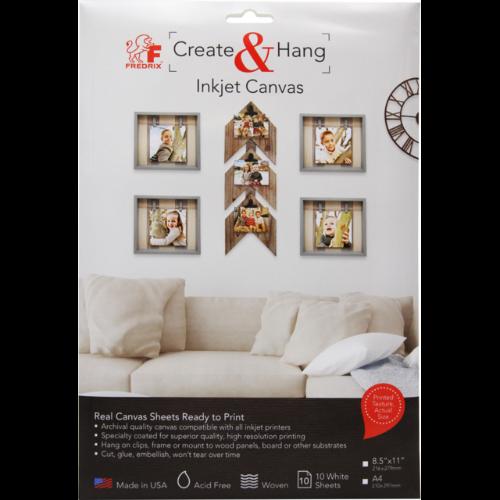
Some useful information about Fredrix Inkjet canvas:
- The water resistant inkjet coating on Fredrix archival print canvas produces excellent printing results with both dye and pigment based inks.
- The matte finish is ideal for fine art prints, creating a soft look while allowing brilliant colours.
- The canvas is compatible with HP, Epson, Cannon, Lexmark, and other inkjet printers.
- The smoother, whiter side is the print side. The more textured, natural side is uncoated and will not receive the ink properly.
- Results may vary with printer model, printer age, environmental conditions and other factors.
- Fredrix recommends that prints made using their canvas be protected with a laminate coating designed for digital printing applications.
- Details
- Category: How to use our products
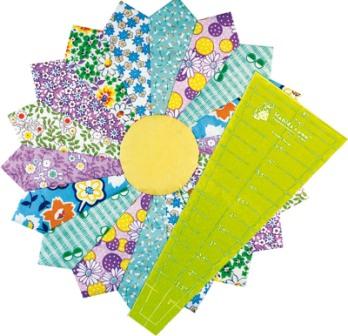
Matilda’s Own patchwork quilting templates are laser-etched acrylic shapes which can be used in both hand and machine patchwork. The template pieces are made in Australia of translucent plastic, and include cross-lines to help centre blocks, and small holes marking corners and seam allowances. They are especially useful for fussy cutting on both light and dark fabrics. The pieces include a 1/4" (6mm) seam allowance so the cut piece will be the exact size needed for your project. The measurements given on all pieces are the cut size of the pieces and are for use in the American piecing technique.
Tips for using the templates in various patchwork quilting techniques.
Machine Piecing:
Place the template piece on the fabric. Position it over the fabric pattern as desired. Hold the template piece firmly and use a small diameter rotary cutter to cut all around the piece. With the included 1/4" (6mm) seam allowance the cut piece will be the exact size needed for your project.
Hand Piecing:
Trace around the template piece with a fine marking pen. Use the marking holes in the template to mark the corners. These markings will help to align the pieces accurately for hand-stitching.
Fussy Cutting:
Matilda’s Own templates are clear and fluorescent green. This facilitates positioning the template piece over particular sections of a fabric pattern before cutting out the fabric piece. It allows you to select which parts of the fabric design you wish to have on any part of a block.
- Details
-
By Ellie's Cottage
- Category: How to use our products

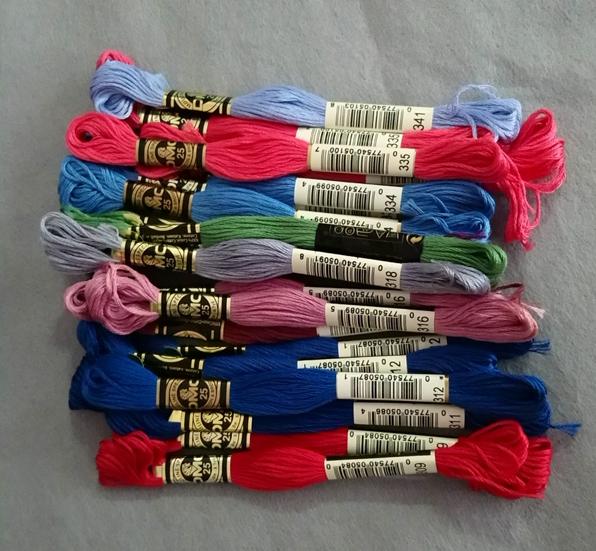
DMC Stranded Cotton is made with finest long staple cotton and is mercerised twice to give embroidery an exceptional sheen.
It comes in 6 easily divisible strands allow you to vary the weight of your stitches to add depth to any project.
Colors use highly resistant, colourfast dyes so embroidery will not fade as a result of washing or exposure to light. 8 metres per skein
Laundry care:
Colours are washable and fade resistant.
Please take into account the fabric onto which you have embroidered.
DMC recommends washing with a mild soap.
After washing, wrap the embroidery in a towel to remove excess water, then dry flat.
Place the embroidery on a clean cloth, preferably while still damp, and iron on the reverse side, at the temperature setting recommended for the fabric.
- Details
- Category: How to use our products

Freezer paper is an incredibly useful item to have in the sewing room. Here are some of the ways it can be used in sewing, patchwork, and more.
Cutting out shapes for appliqué in fabric can be difficult. Try drawing the shape onto the dull side of freezer paper. Cut out the paper shape and iron it onto your chosen fabric with the shiny side facing the fabric. Use a hot iron with no steam. Cut carefully around the shape. If desired leave a seam allowance all around for turning under. Peel off the freezer paper and use the fabric shape as an appliqué piece, either with the edges turned under and stitched, or with machine stitched finish. The freezer paper shape can be reused many times.
Freezer paper makes great stencils for applying paint decoration. Draw a selected design onto freezer paper. Cut out the design keeping the outline as the stencil. Place the stencil onto a piece of fabric or even a T-shirt and use a hot iron without steam to fix it in place. Use a sponge or stencil brush to apply fabric paint. Allow the paint to dry before removing the paper stencil.
In the English Paper Piecing patchwork technique freezer paper can be used as a template. Cut the shapes for the design out of freezer paper, iron the shapes onto the fabric, cut around each shape leaving seam allowance for turning under. Press the seam allowance towards the back of the piece. Hand sew the pieces together according to the overall design. Peel away the freezer paper.
Use freezer paper to stabilize fabric so that it can be put through a printer. Cut freezer paper to A4 size. Iron the A4 paper onto the wrong side of the chosen fabric with shiny side facing the fabric. Use a hot iron with no steam. Make sure the edges are well pressed. Use a sharp rotary cutter and a ruler to slice about 2mm off the edge which will be pulled through the printer first. This removes any loose threads. Press this edge one more time if needed to make sure the paper and fabric are well fixed together. Put through a printer using a setting for thicker paper. Leave to dry well before peeling off the freezer paper.
- Details
- Category: How to use our products
Cross Stitch Favorites
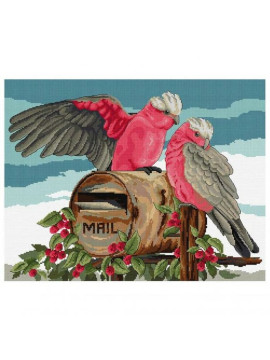
Our range of counted cross stitch kits, and charts includes designs from brands like DMC, Country Threads, Caronie, and Make It . You will find Australian animal and bird designs, floral cross stitch designs, Australian cross stitched landscapes, and childhood or birth celebration designs. Some of our cross stitch charts can be downloaded after purchase

Shop by Category








Search by Brand

























































Difficulty levels for kits
Techniques To Try
We offer ...
Weight calculated postage.
Safe shopping with PayPal or Stripe.
10% everyday discount for registered customers.
Newsletter
Payments, including credit cards, processed by
 OR
OR  Paypal